BLOCKED LEG ARTERIES TREATMENT IN BENGALURU
Leg Pain While Walking? It Could Be Blocked Leg Arteries.
Restore Blood Flow. Protect Your Mobility.
Experiencing leg pain while walking, cold feet, numbness, or wounds that are slow to heal? These symptoms may indicate Peripheral Artery Disease (PAD), a condition in which narrowed or blocked arteries reduce blood flow to your legs and feet. Consult Dr. Monish V, Vascular Surgeon and Interventional Radiologist, for an evaluation and to explore suitable treatment options, including minimally invasive, image-guided procedures when appropriate.
Evaluation of leg circulation and blood flow
Minimally invasive treatment options
Angioplasty and stenting when indicated
Personalized care based on your vascular condition
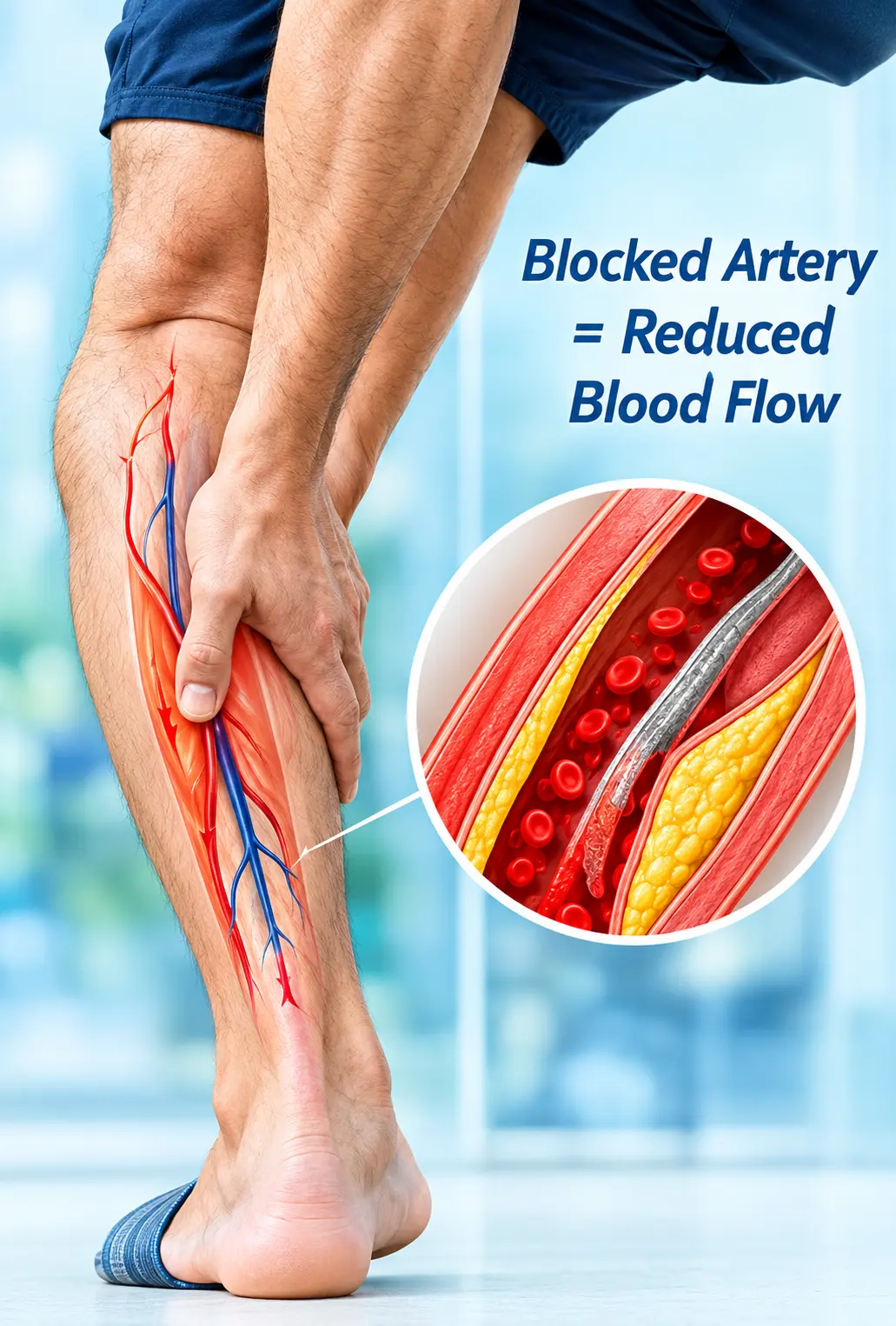
Are Blocked Leg Arteries Affecting Your Daily Life?
Peripheral Artery Disease (PAD) develops when arteries supplying blood to the legs become narrowed, often because of atherosclerosis, in which plaque builds up inside the arteries.
Is an Enlarged Prostate Affecting Your Daily Life?
- Leg pain or cramping while walking
- Pain that improves after resting
- Slow-healing wounds on the feet or toes
- Weak or difficult-to-detect pulses in the feet
- Numbness, tingling, or weakness in the legs
Understanding Blocked Leg Arteries
What Is Peripheral Artery Disease (PAD)?
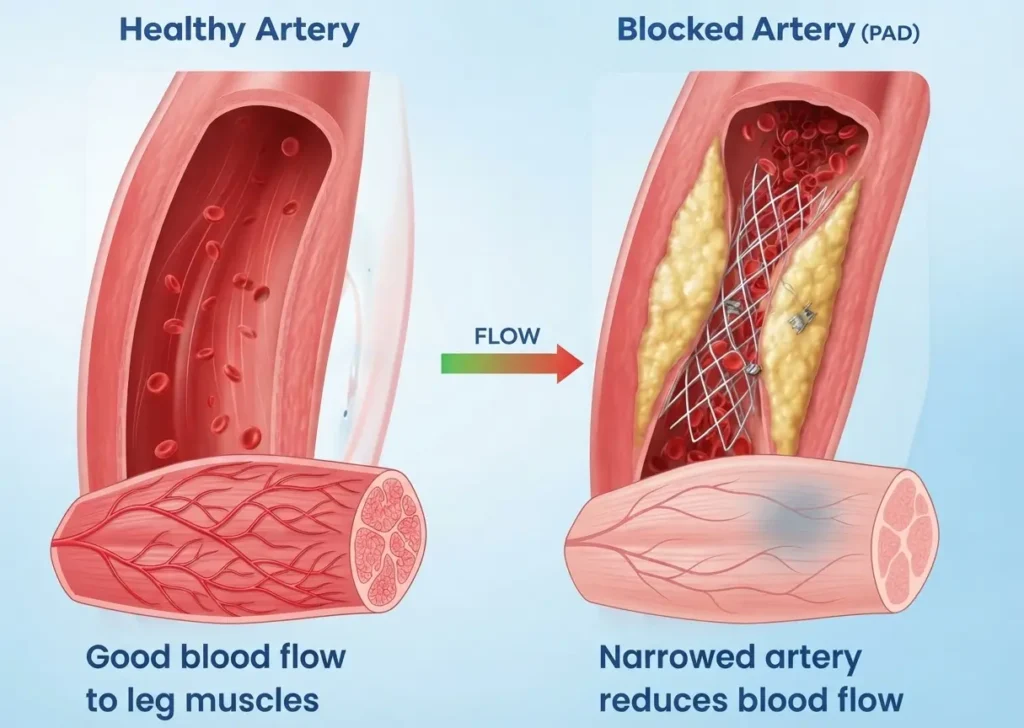
Peripheral Artery Disease (PAD) is a circulatory condition in which arteries carrying blood to the legs become narrowed or blocked. This is commonly caused by a buildup of fatty deposits called plaque.
When blood flow is reduced, the muscles and tissues in the legs and feet may not receive enough oxygen, particularly during physical activity.
If PAD progresses, it can lead to:
- Increasing difficulty walking
- Persistent pain in the foot or leg, even at rest
- Non-healing ulcers or wounds
- Tissue damage and, in severe cases, gangrene
- Risk of limb loss if critical blood flow problems remain untreated
What are your treatment options?
Treatment Options for Blocked Leg Arteries
Treatment depends on the severity of PAD, the location of the blockage, symptoms, wound status, and overall health.
Lifestyle Changes and Medical Management
For many patients, treatment begins with smoking cessation, supervised exercise where appropriate, management of diabetes, blood pressure and cholesterol, and prescribed medicines to reduce cardiovascular risk.
Peripheral Angioplasty
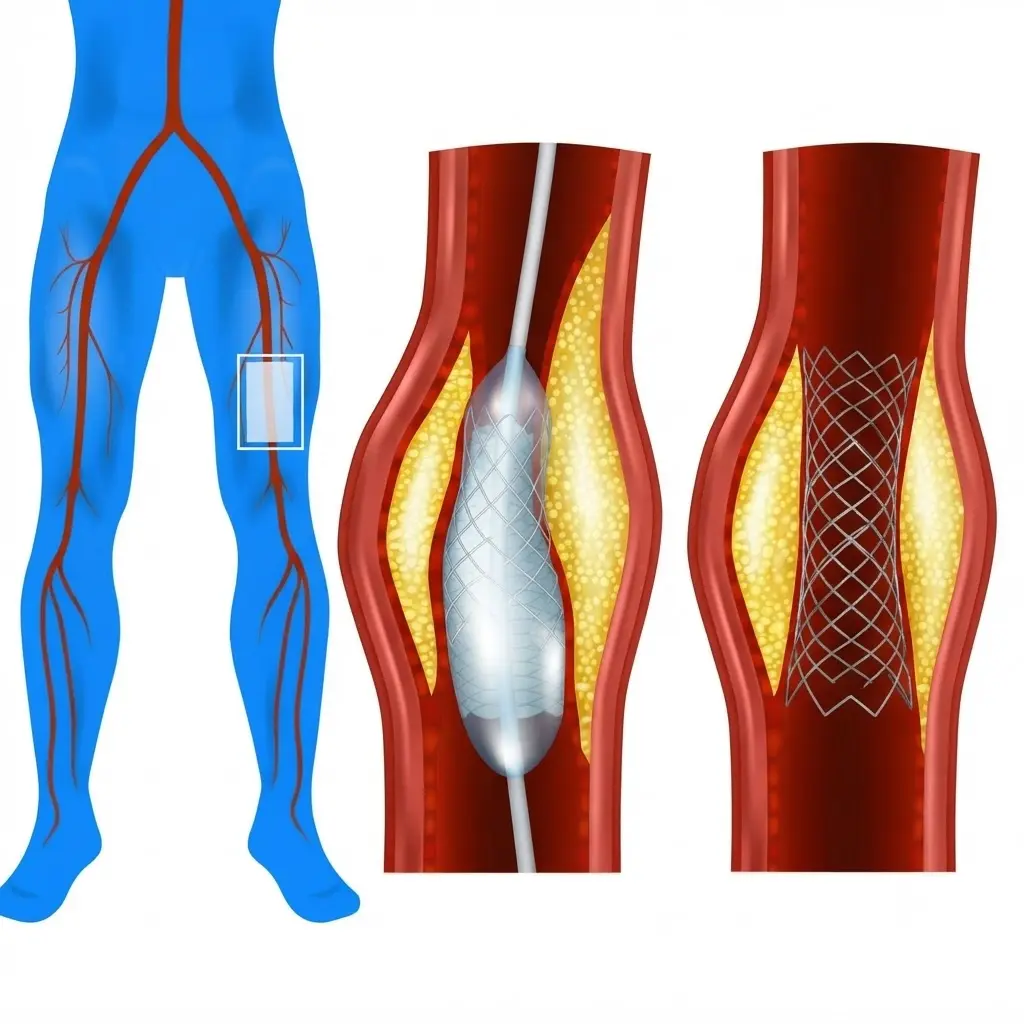
A minimally invasive procedure in which a small balloon catheter is used to widen a narrowed artery and improve blood flow.
Angioplasty With Stenting
In selected cases, a small metal mesh tube called a stent is placed to help keep the artery open after treatment.
Catheter-Directed Thrombolysis or Thrombectomy
When a blood clot is responsible for a significant blockage, selected patients may require catheter-based treatment to dissolve or remove the clot.
Surgical Revascularization
Some patients with complex or extensive disease may benefit from bypass surgery or another surgical approach.
Minimally Invasive Angioplasty for Blocked Leg Arteries
When a narrowed or blocked leg artery significantly reduces blood flow, peripheral angioplasty may be recommended to improve circulation.
During the procedure, a thin catheter is guided through the blood vessels to the affected artery using imaging guidance. A small balloon may be inflated to widen the narrowed section. A stent may also be placed when appropriate to help maintain blood flow.
Potential Benefits for Suitable Patients
- Treatment through a small catheter access point
- No large incision at the blockage site
- Improved blood flow to the affected leg or foot
- Potential improvement in walking-related symptoms
- Support for wound healing when reduced circulation is contributing to the wound
- May help preserve the limb in selected patients with severe circulation problems
Meet Dr. Monish V
An Vascular Interventional Radiologist at Yelahanka, Bengaluru
Dr. Monish V is a Vascular Specialist at Manipal Hospital Yelahanka and Venuva Vascular Centre, Malleshwaram, with over a decade of experience in minimally invasive, image-guided treatments. He helps patients avoid major surgery by offering non-surgical and catheter-based solutions wherever appropriate. Patients looking for a Uterine Fibroid Specialist in Bangalore can consult him to explore suitable minimally invasive treatment options based on their condition.
His clinical focus includes conditions such as varicose veins, varicocele, uterine fibroids, thyroid nodules, enlarged prostate, blocked leg arteries, and selected cases of deep vein thrombosis. Patients researching Varicose Vein Treatment Cost in Bangalore can seek guidance on available treatment options and the factors that may influence the overall cost. Many procedures are performed as day-care treatments, with the potential for faster recovery and minimal discomfort.
Dr. Monish has been published in reputed national and international journals and has presented his work at leading interventional radiology conferences. He is actively involved in advancing evidence-based, minimally invasive care.
- His philosophy is simple.
- Explain options clearly.
- Choose the safest effective treatment.
- Recommend surgery only when it is truly necessary.
What Patients Say

 Vasanth Sagar
Trustindex verifies that the original source of the review is Google.
Good response from the staff. Cafeteria needs to have more options Sandhya AnilAll the staffs were humble and friendly. Even service was good.
 SHARWAN VHealth checkup department yelahanka staffs are helpful and doing great service
 ravichandta raviManipal hospital Yelahanka i had health checkup today evening good and done well... service was good 👍 i recommend
 Ankur PrashantI visited Manipal hospital Yelahanka today and I met Dr Ashok Kumar from ortho and was assisted by Chaya and Tanushree and Sanika and the experience was really good. He explained the treatment very well and it was really informative
 Saibanna BiradarManipal hospital Yelahanka - I had very great experience, I had come for my petct scan the Dr Reddy, Madam Kavitha Ms Martina Sister Soundini treated me so well that I did not felt that I came for any scan family atmosphere they created.. Thank you to all Nuclear medicine team for the support ..
 Ramanatha RaoThis is V. Gayathri. I visited Manipal Hospital, Yelhanka, today. The building is very spacious and clean. I consulted the orthopedic, Dr. Sridhar Singh; he was very friendly and cooperative. I had to get two x-rays done, and the staff there were very good and courteous. The staff in the orthopedic wing was quite helpful and compassionate; I was deeply touched. Overall, the hospital visit was very good. Service at the cafeteria on the ground floor was nice, but it is too small for a hospital of that size. Though there is one on the 5th floor, the patients on the ground floor need a bigger cafeteria. Maybe another cafeteria can be opened on the ground floor. Thanks.
How Does Leg Artery Angioplasty Work?
01. Consultation & Vascular Assessment : Your symptoms, medical history, foot condition and circulation are evaluated.
02. Imaging & Treatment Planning : Doppler ultrasound or angiographic imaging may be used to locate the blockage and plan the procedure.
03. Image-Guided Treatment : If indicated, a catheter-based procedure is used to widen the narrowed artery, with stenting when appropriate.
04. Recovery & Follow-Up : Follow-up care monitors circulation, symptoms, wound healing when relevant, and the effectiveness of treatment.
Is It Time to Get Your Leg Circulation Checked?
A vascular evaluation may be helpful if you:
- Experience recurring leg pain or cramping while walking.
- Need to stop frequently because of leg discomfort.
- Have cold feet or changes in foot colour.
- Notice a wound on your foot or toes that is slow to heal.
- Have diabetes and new foot symptoms or circulation concerns.
- Have been diagnosed with PAD or blocked leg arteries.
- Continue to experience symptoms despite medical treatment.
CONSULT IN PERSON
Two clinics across North & Central Bengaluru.
Manipal Hospital, Yelahanka — North Bengaluru
Vascular & Interventional Radiology OPD, Yelahanka, Bengaluru, Karnataka
Venuva Vascular Centre — Central Bengaluru
Dedicated vein & vascular clinic, Malleshwaram, Bengaluru, Karnataka
frequently asked questions
What causes blocked arteries in the legs?
The most common cause is atherosclerosis, where fatty deposits build up inside arteries and restrict blood flow. Diabetes, smoking, high blood pressure and high cholesterol increase the risk.
What are the early signs of Peripheral Artery Disease?
Common early symptoms include leg pain or cramping while walking that improves with rest, cold feet, numbness and changes in walking distance. Some people have no obvious symptoms.
Can blocked leg arteries be treated without surgery?
Yes. Depending on the severity of PAD, treatment may include lifestyle changes, supervised exercise, medication and minimally invasive procedures such as angioplasty. Some patients may require surgery.
What is angioplasty for blocked leg arteries?
Angioplasty is a catheter-based procedure that uses a small balloon to widen a narrowed artery. A stent may be placed in selected cases to help keep the artery open.
Is angioplasty better than bypass surgery?
Neither option is best for every patient. The decision depends on the location and extent of the blockage, the severity of symptoms, the condition of other arteries and overall health. A vascular specialist can discuss the most appropriate approach.
Can PAD cause foot ulcers or gangrene?
Yes. Severe reduction in blood flow can prevent wounds from healing and may lead to tissue damage or gangrene. Early evaluation is especially important for people with diabetes or persistent foot wounds.
Can blocked leg arteries lead to limb loss?
Severe PAD, particularly when accompanied by critical blood-flow reduction, infection or tissue damage, can threaten the limb. Timely assessment and appropriate treatment may help reduce this risk.
How are blocked leg arteries diagnosed?
Assessment may include an ankle-brachial index (ABI), arterial Doppler ultrasound and additional vascular imaging, such as CT angiography, when indicated.
Can blocked leg arteries return after angioplasty?
Yes. An artery can narrow again, or disease can develop in other arteries. Follow-up, prescribed medication and management of risk factors are important after treatment.