DEEP VEIN THROMBOSIS (DVT) TREATMENT IN BENGALURU
Persistent Leg Swelling or Pain? It Could Be a Blood Clot.
Advanced, Minimally Invasive Treatment Options for Deep Vein Thrombosis
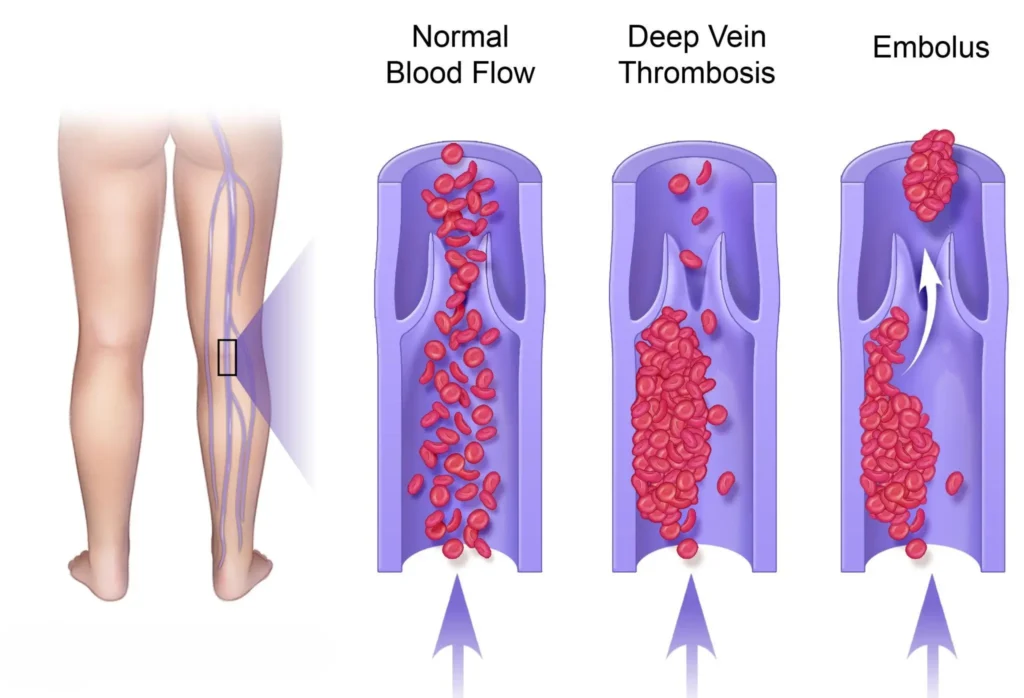
Deep Vein Thrombosis (DVT) occurs when a blood clot forms in a deep vein, most commonly in the legs. If left untreated, it can lead to serious complications, including pulmonary embolism. If you are experiencing unexplained leg swelling, pain, warmth or heaviness, timely medical evaluation is important. Consult Dr. Monish V, Vascular Surgeon and Interventional Radiologist, to understand your condition and explore appropriate treatment options.
Evaluation and management of deep vein thrombosis
Advanced catheter-based treatment options
Mechanical thrombectomy for selected patients
Personalized treatment planning and follow-up
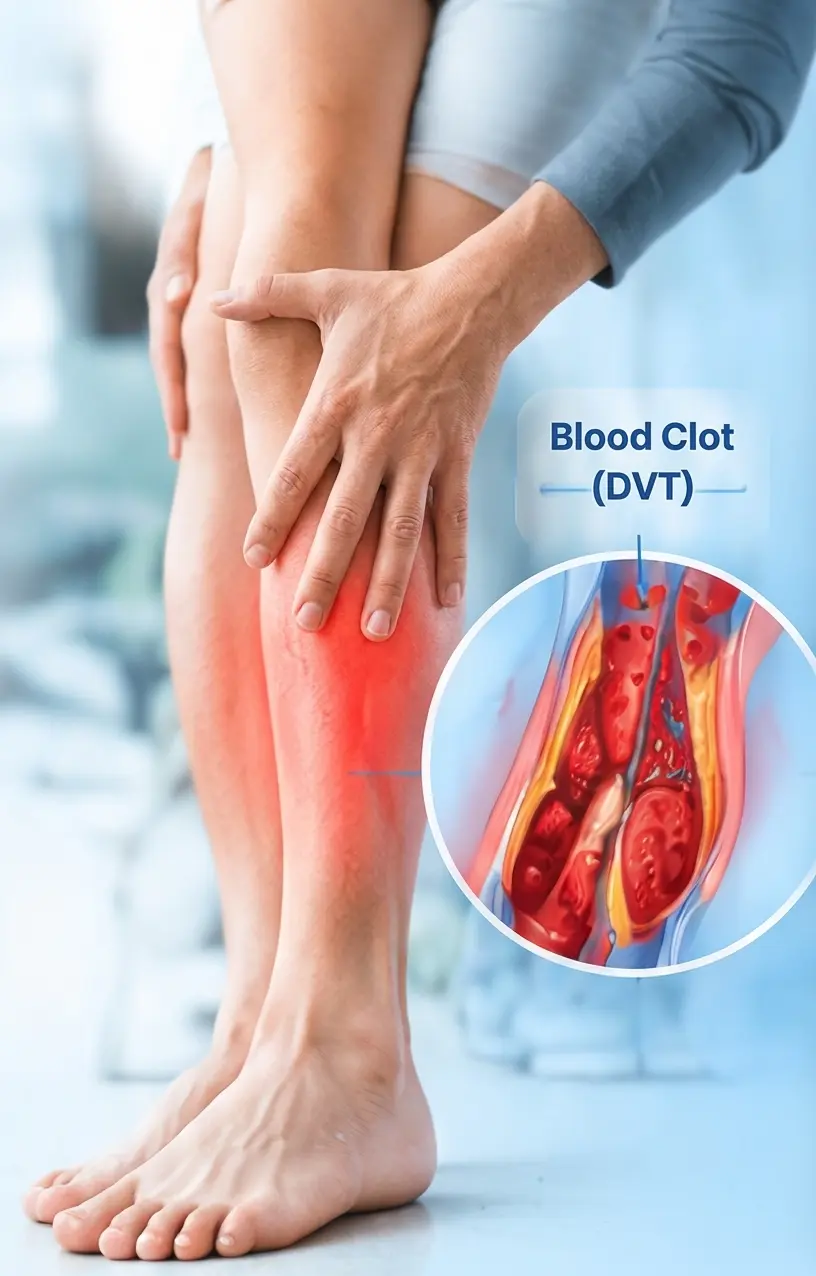
Symptoms of DVT
Experiencing These Symptoms in Your Leg?
Deep Vein Thrombosis can develop when blood forms a clot in one of the deep veins, often in the calf, thigh or pelvis. Recognizing the warning signs is important because some blood clots can cause serious complications.
Common Symptoms of DVT
- Swelling in one leg, sometimes involving the calf or thigh
- Pain or tenderness in the affected leg
- Warmth in the swollen area
- Redness or discoloration of the skin
- A feeling of heaviness or tightness in the leg
- Pain that may increase while walking or standing
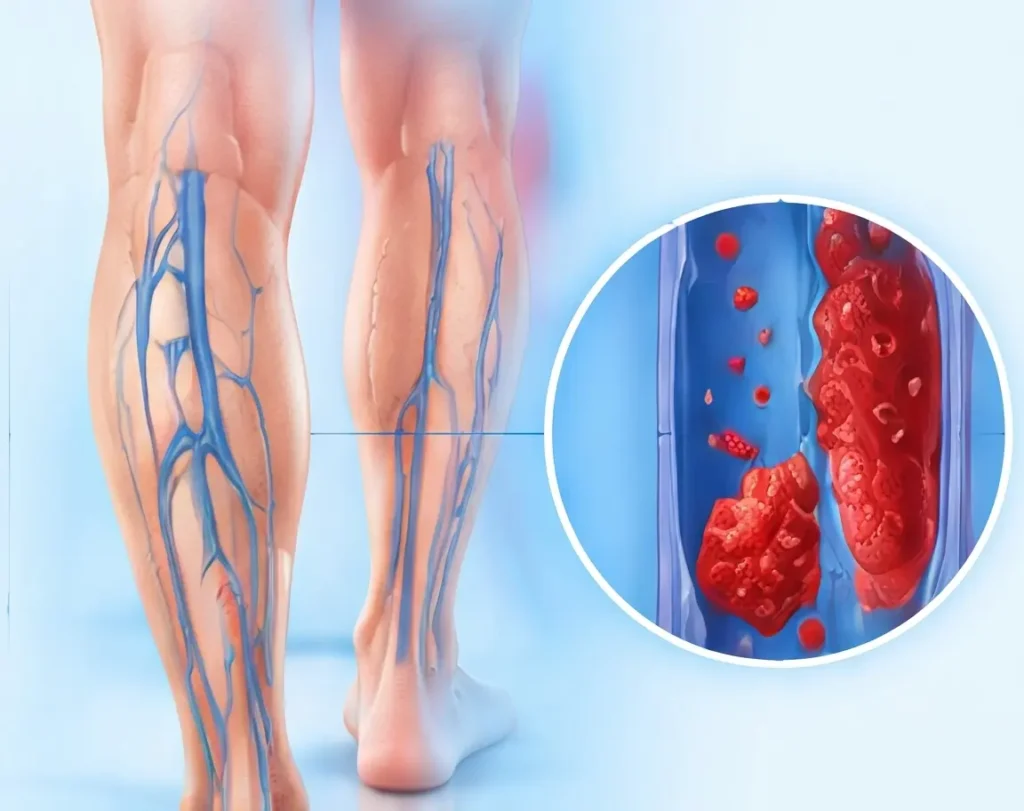
Are You at Risk of Deep Vein Thrombosis?
DVT can affect people of different ages, but certain conditions and lifestyle factors can increase the risk.
Common Risk Factors
- Prolonged Sitting: Long-distance travel or extended periods of immobility.
- Recent Surgery: Particularly major orthopedic or abdominal surgery.
- Pregnancy and Postpartum Period: Hormonal and circulatory changes can increase the risk.
- Obesity: May increase the likelihood of developing blood clots.
DVT Treatment Options
Which DVT Treatment Is Right for You?
The treatment approach depends on the location of the blood clot, its severity, the patient’s symptoms, bleeding risk and overall health.
Anticoagulation Therapy
Blood-thinning medications help prevent the existing clot from growing and reduce the risk of new clots forming. They allow the body's natural processes to gradually break down the clot.
Catheter-Directed Thrombolysis
A clot-dissolving medication is delivered directly into the affected vein through a catheter. It may be considered for selected patients with extensive, recent DVT.
Mechanical Thrombectomy
Specialized devices are used to remove clot material through a catheter-based approach. It may be considered in selected patients, particularly those with extensive symptomatic DVT.
Compression Therapy and Follow-Up
Compression may help manage leg swelling and discomfort in selected patients. Follow-up is important to monitor recovery and assess for long-term complications.
IVC Filter Placement
In selected situations, an inferior vena cava (IVC) filter may be considered when anticoagulation cannot be used or when specific clinical indications exist. It is not routinely required for DVT.
Meet Dr. Monish V
An Vascular Interventional Radiologist at Yelahanka, Bengaluru
Dr. Monish V is a Vascular Specialist at Manipal Hospital Yelahanka and Venuva Vascular Centre, Malleshwaram, with over a decade of experience in minimally invasive, image-guided treatments. As an experienced Varicose Vein Doctor in Bangalore, he helps patients explore effective non-surgical and catheter-based solutions wherever appropriate, avoiding major surgery whenever possible.
His clinical focus includes conditions such as varicose veins, varicocele, uterine fibroids, thyroid nodules, enlarged prostate, blocked leg arteries, and selected cases of deep vein thrombosis. Patients seeking Uterine Artery Embolization in Bangalore can consult him to understand this minimally invasive treatment option for uterine fibroids. Many procedures are performed as day-care treatments, offering faster recovery and minimal discomfort.
Dr. Monish has been published in reputed national and international journals and has presented his work at leading interventional radiology conferences. He is actively involved in advancing evidence-based, minimally invasive care.
- His philosophy is simple.
- Explain options clearly.
- Choose the safest effective treatment.
- Recommend surgery only when it is truly necessary.
What Patients Say

 Vasanth Sagar
Trustindex verifies that the original source of the review is Google.
Good response from the staff. Cafeteria needs to have more options Sandhya AnilAll the staffs were humble and friendly. Even service was good.
 SHARWAN VHealth checkup department yelahanka staffs are helpful and doing great service
 ravichandta raviManipal hospital Yelahanka i had health checkup today evening good and done well... service was good 👍 i recommend
 Ankur PrashantI visited Manipal hospital Yelahanka today and I met Dr Ashok Kumar from ortho and was assisted by Chaya and Tanushree and Sanika and the experience was really good. He explained the treatment very well and it was really informative
 Saibanna BiradarManipal hospital Yelahanka - I had very great experience, I had come for my petct scan the Dr Reddy, Madam Kavitha Ms Martina Sister Soundini treated me so well that I did not felt that I came for any scan family atmosphere they created.. Thank you to all Nuclear medicine team for the support ..
 Ramanatha RaoThis is V. Gayathri. I visited Manipal Hospital, Yelhanka, today. The building is very spacious and clean. I consulted the orthopedic, Dr. Sridhar Singh; he was very friendly and cooperative. I had to get two x-rays done, and the staff there were very good and courteous. The staff in the orthopedic wing was quite helpful and compassionate; I was deeply touched. Overall, the hospital visit was very good. Service at the cafeteria on the ground floor was nice, but it is too small for a hospital of that size. Though there is one on the 5th floor, the patients on the ground floor need a bigger cafeteria. Maybe another cafeteria can be opened on the ground floor. Thanks.
How Does Catheter-Based DVT Treatment Work?
01. Consultation & Evaluation : Your symptoms, medical history, previous DVT episodes and risk factors are assessed.
02. Diagnostic Imaging : Venous Doppler ultrasound and additional imaging, when required, help identify the location and extent of the clot.
03. Catheter-Based Treatment : If clinically appropriate, a catheter-based procedure such as thrombolysis or mechanical thrombectomy may be performed to treat the clot.
04. Recovery & Follow-Up : Your recovery, blood circulation and medication requirements are monitored according to your treatment plan.
When Should Consult a DVT Specialist?
A specialist evaluation may be important if you:
- Have swelling in one leg without an obvious cause.
- Experience persistent leg pain, heaviness or tenderness.
- Have been diagnosed with Deep Vein Thrombosis.
- Have an extensive blood clot involving the thigh or pelvic veins.
- Have experienced recurrent DVT.
- Have persistent swelling following a previous DVT episode.
- Want to understand whether catheter-directed treatment is suitable.
- Have been advised to undergo further vascular evaluation.
CONSULT IN PERSON
Two clinics across North & Central Bengaluru.
Manipal Hospital, Yelahanka — North Bengaluru
Vascular & Interventional Radiology OPD, Yelahanka, Bengaluru, Karnataka
Venuva Vascular Centre — Central Bengaluru
Dedicated vein & vascular clinic, Malleshwaram, Bengaluru, Karnataka
frequently asked questions
What is Deep Vein Thrombosis (DVT)?
DVT is a condition in which a blood clot forms in a deep vein, usually in the legs. It can restrict blood circulation and may cause swelling, pain and other complications.
What are the early warning signs of DVT?
Common symptoms include swelling in one leg, pain, tenderness, warmth, redness and heaviness. However, some people may not experience noticeable symptoms.
Is DVT a serious condition?
Yes. DVT can lead to serious complications, including pulmonary embolism, when part of the clot travels to the lungs. Timely diagnosis and appropriate treatment are important.
Can DVT be treated without surgery?
Yes. Most DVT patients are treated with anticoagulant medications. Selected patients may also benefit from minimally invasive catheter-based procedures such as thrombolysis or mechanical thrombectomy.
What is mechanical thrombectomy for DVT?
Mechanical thrombectomy is a minimally invasive procedure that uses specialized devices to remove or reduce blood clots from affected veins through a catheter.
What is catheter-directed thrombolysis?
It is a procedure in which clot-dissolving medication is delivered directly into the affected vein through a catheter to help break down the blood clot.
Can DVT come back after treatment?
Yes. DVT can recur in some patients. Continued medical management, appropriate anticoagulation and follow-up are important to reduce the risk.
How is DVT diagnosed?
Venous Doppler ultrasound is commonly used to detect DVT. Blood tests such as D-dimer and additional imaging may be recommended depending on the patient’s clinical assessment.
How long does DVT treatment take?
Treatment duration depends on the cause of the clot, recurrence risk and individual medical condition. Anticoagulant treatment often continues for at least three months, although some patients require longer treatment.